AutoCAD 2011 Tutorial - The AutoCAD interface, Startup Dialogue Box, Application Button, Quick Access Toolbar, Title Bar, Info Center, Ribbon, View Cube, Navigation Bar, Command Window, Status Bar, Accessing Commands, Basic Command Entry.
Posted by
autocad for macintosh
at
6:49 PM |
3/07/2012
Turbocad Mac V3 2D Cad for Mac [Old Version] Best
Rate This Product :
Turbocad Mac V3 2D Cad for Mac [Old Version] Feature
Operate on both Intel and Power PC based Mac computers. Get peak performance especially on Intel Core Duo, with up to four times the previous processing speed / Leopard OS X Support
Updated DXF/DWG Support - Read/Write AutoCAD files through v2008 with updated DXF/DWG translators. Includes support for model and paper space
Conversion Tool - Create precise 2D wireframe and hidden line drawings from imported 3D models, including AutoCAD, DXF and DWG files
Adobe Illustrator Import & Export
AutoCAD Compatible
Turbocad Mac V3 2D Cad for Mac [Old Version] Overview
2D Drafting and Design for the Macintosh.Precision drawing at its best!From simple hobby sketches to production ready precision drawings TurboCAD Mac offers you powerfulfunctionality typically found in programs costing thousands. With intuitive snaps alignments prompts hintsand online help even beginners can quickly get up to speed. Plus TurboCAD Mac is capable of extractingprecise 2D drawings from imported 3D files as well as turning CAD drawings into Illustrator® files for desktoppublishing and graphic design.System Requirements:Minimum Requirements: G3 256 MB of RAM 200 MB Free on Hard Disk Macintosh OS X (10.4 or greater) 16 MB Accelerated video card with OpenGL support Recommended Requirements: G5 or Intel Mac 512 MB of RAM Macintosh OS X (10.4 or greater) 32 MB Accelerated video card with OpenGL support Three button mouse with wheel Internet connection and service to access online content for Mac and PC Format: MAC 10.4 OR LATERUB/DVD SOFTWARE Genre: PRODUCTIVITY UPC: 730526358421 Manufacturer No: 00TC2M30CC01
Customer Reviews
*** Product Information and Prices Stored: Mar 08, 2012 05:49:37
Posted by
autocad for macintosh
at
6:15 PM |
3/06/2012
72 VIDEOS AUTOCAD CIVIL 3D 2011 CURSO PARA CASA CON CERTIFICACION UNI , CEPS UNI Video Clips. Duration : 5.67 Mins.
www.peruviantec.blogspot.com AUTOCAD CIVIL 3D 2011 CIVIL 3D 2010 2009 ceps uni autocad uni solidworks Redes Windows server 2003 WIFI Ensamblaje de PC 3D Studio FL Studio Coreldraw X4 Web grafico Flash Cs4 Dreamweaver PHP Visual Basic UML Windows XP Word 2007 Excel 2007 Powerpoint Access infouni
Posted by
autocad for macintosh
at
6:12 PM |
3/03/2012
If you have been running Windows Xp for a concentrate of years or more you may find that it is not running quite as speedily and smoothly as it was when you did your first install. I am constantly 'evaluating' software and uninstalling and reinstalling beta software on my computer and have all the time gently come to be more and more disappointed after nine months to a year with the carrying out of my Pc. So I usually do a backup and reinstall all my software, together with Windows.
Please note that this is wholly separate than doing the proper things to troubleshoot and fix individual problems such as system errors or application errors. These things are great fixed by using a systme Restore which is a great new highlight to Windows Xp
Autocad For Macintosh
For anyone that has reinstalled their operating system a few times the process seems pretty simple as they have found all of the gotchas the first few times. I have lost mail and contacts but not much else over the years by following (or not following) a system to reload my operating system and software. This purpose of this guide is to give you a checklist to effect so that a reloading of Windows goes smoothly the first time.
Reloading Windows Xp
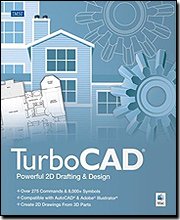
IMSI TurboCAD 2D for Mac [Old Version] Best
Rate This Product :
IMSI TurboCAD 2D for Mac [Old Version] Feature
Powerful 2D drafting and design software with 275+ intuitive, design tools
Symbol palette with drag-and-drop access to 8,000+ symbols and parts
Create 2D drawings from 3D parts; customizable keyboard shortcuts
Assign attributes to any component of a drawing; intuitive layer manager
Compatible with AutoCAD and Adobe Illustrator
IMSI TurboCAD 2D for Mac [Old Version] Overview
Powerful, yet simple to use, TurboCAD Macintosh delivers comprehensive 2D drafting and design tools typically found in professional level CAD programs. Explore your ideas with unprecedented ease, utilizing intuitive design tools, automated user tips and customizable keyboard shortcuts. Produce anything from simple sketches to standards compliant, production ready drawings.
Customer Reviews
*** Product Information and Prices Stored: Mar 04, 2012 05:11:58
The steps are as follows:
1. Backup all data
2. Document your current system drivers and software
3. Delete the Windows and profile directories
4. Reload Window
5. Reload software and data.
6. Get some sleep
1. Backup data.
There are two methods of the process of reloading your operating system. The first is to just delete the system files and the second is to backup the files to Cd or Dvd and then format the hard drive completely, my preference is to delete the system folders and work from there as the actual formatting is not needed as much now as it was in the past.
It is very important to be sure to get a backup of all of your data. My current convention is to generate a briefcase in the Root of the C: drive called "backup for reload" and copy all of my files in there. The first few times that I reloaded my motor I whether saved all of the data to an additional one hard drive so I could format my main drive or I would just generate a briefcase to save my data in that was in the root of the C: drive and just deleted the Windows directory. One thing to be aware of is that a new install of Windows is going to delete your current profile where your data is kept, you will be warned in the install and I am warning you here as well!
First of all Windows likes to keep all of your documents in your "My Documents" briefcase and even though the icon is on the desktop the briefcase is undoubtedly in the following location: c:documents and settings . The documents and settings briefcase is quite important as it does have all of the files that are related with you as a user. Other folders in documents and settings are "Favorites" "Application Data" and "Local Settings".
If you use Outlook Express for your mail you will want to back up its folders. Open up Outlook Express and go to tools to options to maintenance and there is a button called "Store Folder" this will tell you where the briefcase is that holds all of your mail, usually located in
c:--> documents and settings(logon name)--> local settings--> Application Data--> Identities--> Microsoft--> Outlook Express". Hard to find spot but important.
If you are using Outlook for your mail and contacts my policy has all the time been to quest for all .pst files on your Pc this will give you your main as well as archive folders and maybe even some long lost mail from before.
I also do a quest and put the following in the quest box *.doc;*.xls;*.ppt;*. Mdb;*.pub this will quest for all office documents on the Pc, when I get the effect I only backup the files that are not in my documents and settings for my name or in the my documents folder.
How big is your "Backup and Reload" briefcase now that you have all of your data in it? Can you back it up to a Cd? Or two, or a Dvd? This would be a nice time to do that save to a Cd so that in the event of a catastrophic failure of your hard drive you can go back and reload your data later.
2. Document your current system drivers and software
So often when I am working on a computer I find that after a format and reload of Windows that I am missing a network card driver or a video driver. Before you turn off the computer to format it or delete the system files make sure that you have a copy of all of the drivers, realistically the only drivers that seem to convert are the video drivers. What other drivers might you need? Well If you have the Cd that came with the motherboard then you will probably only need to download the sound card, video, monitor, modem drivers and you can find the type of hardware by right clicking on the my computer and going to properties and then depending on your version of Windows look for the device manager. I do not tend to format my drive I only delete the Windows directory and the Documents and settings directory when I do a reload so I can then find the files later still sitting on the hard drive. My preference is to generate a briefcase called mydrivers in the root of the C: drive so that after you reload Windows you will have a central place to go to find the drivers. Now just go out and download the drivers that you need.
3. Delete the Windows and profile directories
Now, this is where you have to take a deep breath before you get started as when we delete files we are not going to be able to get them back. When I delete files on the computer before I reinstall Windows I do not delete all of the files or format the drive. The only way that you can delete what you want is to use some kind of a boot disk that does not load Windows from your hard drive. I use the greatest Windows Boot Cd and after I boot the drive up I move some data instead of deleting. More often than not I will have missed some important file so I generate a "backup" briefcase that contains all of my data. I drop my current "Documents and Settings" briefcase into this backup briefcase and then also any applications from the "Program Files' briefcase that may have some of their own files. This would include databases like Act or Maximiser and Tax software or book keeping software like Quicken. Most of the data files for applications are kept in the "My Documents" folder.
In the install of Windows you will need to have at least 2 gigs of free space so make sure that you have freed up adequate space to do the install
When I am deleting folders I am most interested in deleting the" Documents and Settings" and "Windows" folders, as this is where you will find user settings as well as the registry both good and bad. If you are undoubtedly aggressive you can also include the "Program Files" briefcase so that after you have reloaded Windows you can have the default settings for each application. I also delete any files that are sitting in the root of the C: drive.
4. Reloading Windows
Now that you have deleted the unneeded files and directories you will have to give yourself an operating system to reload all of your software into. I prefer Windows Xp now although if you have a bit of an older computer Windows 2000 will probably be fine and takes less system resources.
Just a note here, Windows 98 is a bad selection and there are a few reasons why. Windows 98 is not supported anymore by Microsoft so it does not have any new security fixes or drivers being written for it. One other issue is that the underlying file system that Windows 98 supports is Fat32, if you are loading Windows 2000 or Xp you will likely want to take benefit of Ntfs but the only good way to do this with a fresh load is to format your machine, this will delete all of the data that you have on your Pc now. If you are interesting from Windows 98 there will be a spot in the install request if you would like to format or convert the drive to Ntfs, I would avoid this as you can convert after you have switched your Pc to Windows Xp in Disk supervision from the Computer supervision application in Windows.
The rest of the install should go smoothly and after you have concluded you will have a nice new clean install of Windows with only the recycle bin on the desktop and no applications. Maybe the desktop is only 256 colors or the size is not quite right but this is where you will fix that qoute by reloading your drivers. Go to start and right click on the "My Computer" icon and pick properties, go to the hardware tab, now find the device owner and anyone with an exclamation point or a red X will need a new driver. Right click on the icon, pick modernize driver and walk straight through looking your drivers. If you can not find the driver in the lookup then you may have to go back to the mydrivers briefcase and run the executables for the drivers which may quicken the process of loading new drivers.
5. Reload Software and Data
Now the slow torturous part of the Windows install begins. I all the time do this reloading of Windows because my computer has gently slowed down from all of the software that I have loaded up and pledge never to do again, I have proven time and time again that I don't live up to the pledge. The only software that I load first is Office Xp and setup my personal settings and mail folders from Outlook (check colse to for this documentation as it varies with your version of Office) and I also install my generally used utilities. I keep my software install disks close by and just load software as I need it over the next few days.
6. Get Some Sleep
Congratulations. This process is very long and occasionally we do lose data that was missed in the backup but after you are done you have a computer that is at least as good as the day you started using it. There are fewer errors, less hiccups and the computer is fast and responsive. Although it takes a long time I am more than willing to do it as long as I cleared some time beforehand as the contrast in working with the computer for some time after is a real treat.
Reloading Windows Xp[TUT] How To Install Single Player Commands On Minecraft 1.7.3 Beta Video Clips. Duration : 2.07 Mins.
MOD www.minecraftforum.net Delete "META-INF" winrar www.rarlab.com I give full credit to the owner of the mod.